Blast Processing Was a Feeling: Remembering When the Mall Kiosk Sold Us on Sega
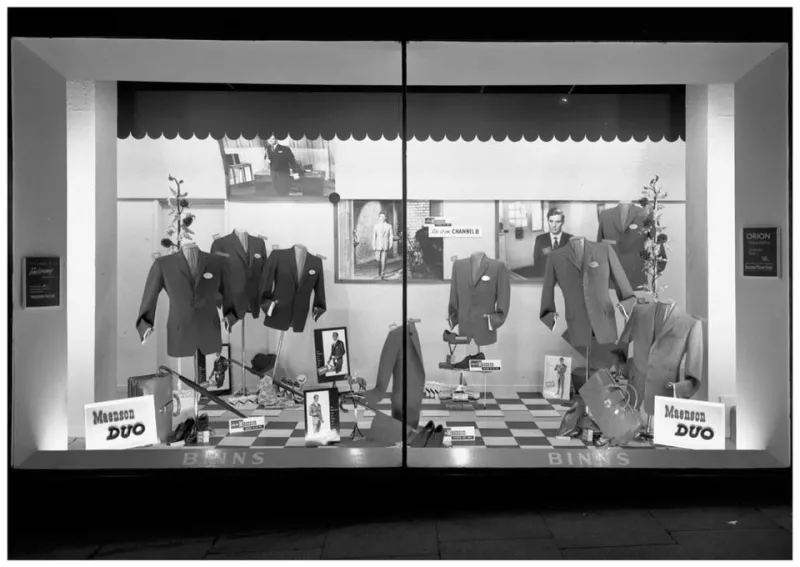
Photo: Tyne & Wear Archives & Museums, No restrictions, via Wikimedia Commons
Ask anyone who grew up in the late '80s or early '90s what a Genesis looked like, and chances are they won't describe the console. They'll describe the kiosk.
A hulking plastic display bolted to the floor of a Toys R Us or a Software Etc., a CRT humming behind a plexiglass screen, and Sonic the Hedgehog sprinting through Green Hill Zone on an endless loop while some kid in a Hypercolor shirt hammered the demo controller. That image — not a commercial, not a magazine ad — is where Sega's war for American hearts was actually won.
The Demo Unit Was the Sales Pitch
Sega's advertising in this era gets all the glory. "Genesis does what Nintendon't" is still quoted by people who weren't alive when it aired. But slogans only work if the product backs them up, and for a lot of American families, the moment of proof happened standing on that weird carpet they used in electronics departments, watching a demo reel that made Nintendo's lineup look positively sedate.
The kiosks were engineered for exactly one thing: contrast. Sega's demo loops leaned hard on speed — Sonic, the arcade ports, the flashier third-party stuff. Nintendo's in-store presence, by comparison, often showcased the slower, gentler side of the NES and SNES. A kid standing between the two displays wasn't making a reasoned comparison. They were having a visceral reaction to frame rate and attitude.
"You could tell within ten seconds which kid was going home and begging for a Genesis," one former retail employee from a Chicago-area Babbage's told us. "They'd play the Sonic demo, get yanked off by a parent, and just stand there staring. Sega knew what they were doing with those loops."
Retail Was the Battlefield
It's easy to forget how much power retail held in 1991. There was no online buzz, no day-one patch discourse. If your game didn't look good on a store floor, it effectively didn't exist. Sega of America, under Tom Kalinske, treated store presence like a military campaign — aggressive co-op advertising, big display footprints, and demo units pushed into markets Nintendo had treated as an afterthought.
The displays themselves have become collector grails. A working Genesis kiosk cabinet today can fetch serious money, and the people hunting them down aren't just chasing nostalgia for the games. They're chasing the fixture itself.
"I bought one off a guy who worked at a KB Toys in the '90s and just... kept it," says a collector who runs a Sega preservation group on Facebook. "It's got the scuffs, the cigarette smell from the stockroom, everything. My kids think I'm insane. But when I power it up and the Sonic demo starts, they get it immediately. That's the whole point. That's what it did to us."
Raising the Parents
Here's the part that gets overlooked: the kiosk generation didn't just buy Genesis consoles. They grew up, and a lot of them became the parents buying Switches and PlayStations for their own kids. Sega's in-store strategy wasn't just a sales tactic for 1991 — it was an early lesson in how to make a brand feel like a personality.
That's why the kiosk memory hits differently than, say, remembering a magazine ad. It was shared physical space. Kids crowded around one demo unit, taking turns, watching over each other's shoulders. It was the closest thing the console wars had to a public square.
And the strategy worked on the parents too, which was the real genius. A mom watching Sonic blaze through a loop didn't need to understand specs. She understood "fast" and "my kid won't shut up about it." Sega built its American empire on that two-sentence pitch, delivered by a glowing CRT in a mall.
The Loop Never Really Stopped
Sega exited the hardware business in 2001, but the playbook it wrote — attitude, speed, demo units, meeting kids where they already hang out — got absorbed by the entire industry. Every game store kiosk since, every in-store Switch demo station, every storefront screen playing a trailer on loop is downstream of what Sega was doing at Toys R Us while the tape played Genesis games overhead.
So the next time you see a grainy photo of one of those kiosks making the rounds online, and you feel a weird pang of something you can't quite name — that's not just nostalgia for a console. It's nostalgia for the moment Sega figured out that the best ad isn't an ad at all. It's a kid's hands on a controller, a demo timer counting down, and a parent standing behind them, already reaching for their wallet.
Genesis did what Nintendon't. But the kiosk is what made us believe it.