That Gritty Buzz in Every Genesis Game? Thank the YM2612.
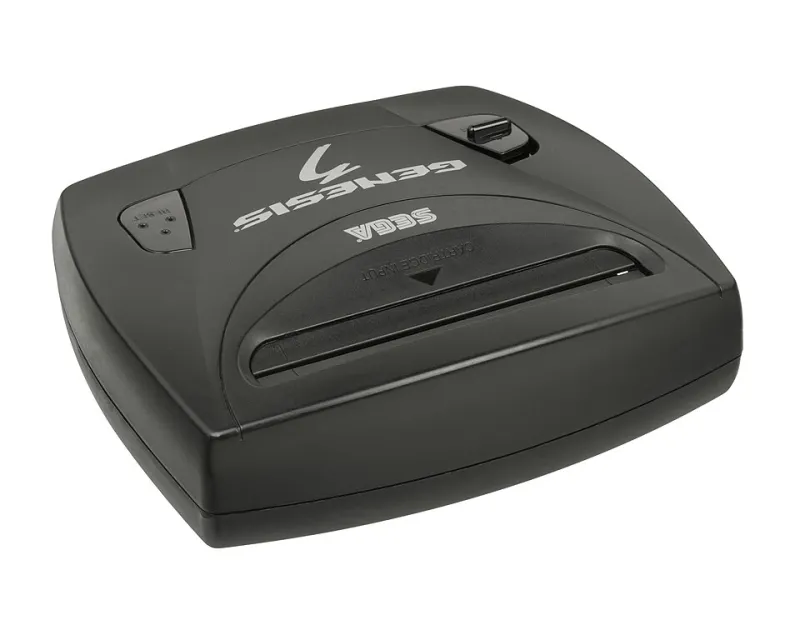
Photo: Evan-Amos, Public domain, via Wikimedia Commons
Fire up Streets of Rage 2 on a real Genesis sometime — not an emulator with a fancy soundfont, the actual hardware — and listen to what comes out of that little speaker. It doesn't sound like a 1989 home console. It sounds like a Chicago warehouse party at 2 AM.
That's the Yamaha YM2612 doing its thing, and honestly, it never stopped.
The Chip That Refused to Sound Cute
Here's the quick version for the non-audio-nerds: while Nintendo's Super NES leaned on sampled audio that could mimic orchestras and rainstorms, Sega's Genesis ran on FM synthesis — a technique that builds sounds by stacking and modulating sine waves. It's the same basic DNA as the Yamaha DX7, the keyboard that defined 80s pop radio.
On paper, the SNES approach sounds better. More channels, more realistic instruments, all that. On paper.
In practice, the YM2612 had a sound. A raspy, punchy, slightly wrong-in-all-the-right-ways character. FM synthesis on the Genesis didn't do lush — it did attitude. Punchy bass that hit like a slap. Brass that snarled. Drums that cracked. It was the audio equivalent of Sega's whole 'Genesis does what Nintendon't' swagger, except the hardware actually backed it up.
Yuzo Koshiro Broke the Chip on Purpose
You can't talk about the YM2612 without talking about Streets of Rage 2. Composer Yuzo Koshiro basically treated the chip like a piece of club equipment, writing a custom programming language just to squeeze sounds out of it that Sega probably never intended.
The result? Tracks like 'Go Straight' and 'Slow Moon' that DJs still spin in remix sets today. This wasn't background music for a beat-'em-up — this was genuine house and techno, rendered on a $189 console plugged into a bedroom TV in suburban Ohio. American kids who'd never set foot in a rave were absorbing real electronic music structure without realizing it.
And then there's Sonic. Masato Nakamura's soundtracks for the first two games turned the chip's limitations into signatures — that rubbery bass on Green Hill Zone is unmistakable within half a second. Try doing that with a sample pack.
The Legacy Never Died
Here's the part that should surprise nobody who's been paying attention: FM synthesis is everywhere in 2024.
Modern producers hunt down YM2612 emulations and VSTs to put that specific digital grit into tracks. Chiptune artists release entire albums on real Genesis hardware — the demoscene and chip music community never stopped, they just got bigger. And indie games have kept the flag flying hard: titles like Sonic Mania (composed with authentic FM tools by Tee Lopes), the Streets of Rage 4 revival, and countless Steam-era retro throwbacks deliberately chase that YM2612 character because nothing else sounds like it.
There's a whole ecosystem now. DefleMask lets anyone compose for the chip. Musicians stream live YM2612 covers on Twitch. The barrier to entry that once required assembly-language wizardry is gone, and the result is more great FM music being made right now than at any point since 1994.
Why It Still Works
I think the honest answer is imperfection. The YM2612 couldn't be smooth, so composers had to be creative. Its sounds are punchy and abstract rather than realistic, which means they don't age the way sampled realism does. A 1993 attempt at an orchestral string section sounds dated. A 1993 FM bassline sounds like it could drop on a SoundCloud playlist tomorrow.
The SNES chased what music already was. The YM2612 pointed at what music was becoming.
So yeah — Sega's sound chip was doing too much, in the best possible way. Thirty-five years later, it's still slapping, and honestly, it might never stop.