Ninety Cents a Minute: How Sega Taught America to Pay for Help

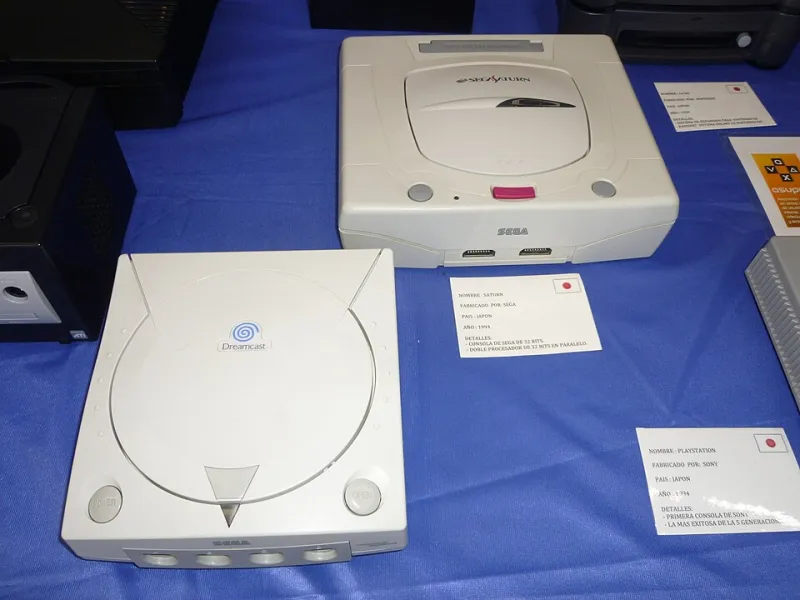
Photo: Tyne & Wear Archives & Museums, No restrictions, via Wikimedia Commons
There's a specific kind of childhood panic that kids today will never know. You're stuck. Genuinely, hopelessly stuck. Maybe it's the Waterfall level in Ecco the Dolphin and you've been circling the same reef for forty minutes. Maybe Dr. Robotnik has turned you into confetti for the tenth straight time. Your options in 1993 were limited: ask a friend who was probably equally lost, brute-force it until your thumbs blistered, or pick up the phone and call a stranger in California who was being paid to help you.
That last option cost real money. Per minute. And somehow, we all just accepted that.
The Booklet Was the Tutorial
Start with the manuals, because they were genuinely spectacular. Sega's Genesis-era instruction booklets weren't the flimsy pamphlets Nintendo slipped into boxes by the tail end of the cartridge years. These were full-color, glossy productions with illustrated enemy charts, backstory lore that never appeared in-game, and — this is the important part — actual strategic advice.
The Streets of Rage II manual taught you special attacks and how to conserve them. The Sonic manuals explained spin dashes and shield mechanics that a lot of players never figured out on their own. Phantasy Star IV's booklet gave you a crash course in a menu system dense enough to require documentation. You read these things on the drive home from the rental store, because the rental store was where you got games, and the drive was long, and there was no other way to know what you were about to do.
There's a lost ritual in that. Today a game loads and a tutorial interrupts your first ten minutes whether you want one or not. Back then, the manual was the tutorial, the lore codex, and the marketing material all in one. Companies like Sega and Working Designs treated them as part of the product. Working Designs famously stuffed joke items, fake hints, and pop-culture riffs into their booklets because they knew you'd actually read them.
Then There Was the Hotline
But manuals could only take you so far, and Sega knew it. Enter the Sega Hints Hotline, the company's officially operated 900-number tip line. The pitch was simple: dial the number, hear a menu of games, pick yours, and listen to recorded hints or talk to an actual operator. The cost hovered around 75 to 95 cents a minute depending on the era, billed to your family's phone bill like a tiny, nagging debt collector.
The economics were ruthless and, in hindsight, kind of hilarious. These were children calling. Children with their parents' phone lines. Every second of dead air — the menu prompts, the operator typing, the pause while someone looked up your level — was billable. Savvy kids learned to have their questions pre-scripted. Say your piece, get your answer, hang up before the minute rolled over. It was speedrunning for customer service.
The operators themselves became minor folk heroes. These were, by most accounts, actual trained game players who had beaten the games they supported. Some later showed up in interviews describing marathon sessions memorizing level layouts so they could field calls about Sonic 3's hidden rings without hesitation. It was a real job: professional video game explainer, staffed at a call center, in the era when that sounded like science fiction.
What the Wiki Killed
Here's the thing worth sitting with: the hotline and the manuals weren't just support infrastructure. They shaped how games were designed. If players were going to pay by the minute for hints, there was a perverse incentive to make games opaque. Cryptic puzzles, hidden endings, secret characters that required absurd conditions — some of that was pure design philosophy, but some of it was a business model. A game nobody could finish without calling was a game that kept the phone bill healthy.
The internet detonated that entire arrangement. GameFAQs text walkthroughs were free and searchable. YouTube made every secret visible in ninety seconds. Wikis catalogued every stat, every drop rate, every optional boss. Modern games, knowing this, design differently — they front-load guidance, mark objectives on maps, and treat difficulty as a settings menu rather than a mystery.
Something was gained, obviously. Nobody's nostalgic for being stuck for a week on a puzzle whose solution was buried in an unmarked wall. But something was lost too. The manual as an artifact — the thing you read before playing, that built anticipation — is basically extinct. And the shared scarcity of information meant that playground rumors had real currency. The E-102 Gamma of schoolyard mythology: the guy who heard from his cousin that you could fight as Sheng Long. When information was expensive, imagination filled the gap.
Sega eventually retired the hotline as the web took over, and honestly, good. Nine-year-olds shouldn't be racking up long-distance charges to learn where the Chaos Emeralds are. But there's a reason collectors today pay premiums for complete-in-box copies with pristine manuals, and why the phrase "hints hotline" still lands with a specific generational twinge. We didn't just pay Sega for answers. We paid for the experience of needing them.