Plug It In Anyway: A Field Guide to Sega's Most Gloriously Doomed Hardware Experiments

Photo: Tyne & Wear Archives & Museums, No restrictions, via Wikimedia Commons
Every console maker has a graveyard. Nintendo buried the Virtual Boy and Power Glove in it. Sony tossed the Sixaxis down a well. But Sega? Sega built an entire amusement park on top of its graveyard, charged admission, and called it innovation. The Genesis-to-Dreamcast era, roughly 1989 through 1999, was a nonstop parade of add-ons, straps, and dongles that ranged from genuinely ahead of their time to 'what were we all thinking.'
We love Sega precisely because of this. Here's a tour through the strangest of them — honestly ranked by how much we still want one.
The Sega Activator: Punching the Air Since 1993
Let's start with the crown jewel of absurdity. The Activator was an octagonal ring you stood inside, an infrared motion controller for the Genesis that translated your flailing into button presses. In theory: you could play Streets of Rage with your body. In practice: you could turn on your Genesis with your body, which was about the ceiling of its capability.
It retailed for around $130 — real 1993 money — and worked by detecting when your limbs broke infrared beams, which meant the entire control scheme was essentially eight invisible buttons you had to memorize while blind. Sega even bundled it with a Mortal Kombat-themed training video hosted by a martial artist. It sold poorly, worked worse, and we'd absolutely buy the inevitable collector's edition reissue tomorrow.
The 32X: The Add-On That Ate Its Own Console
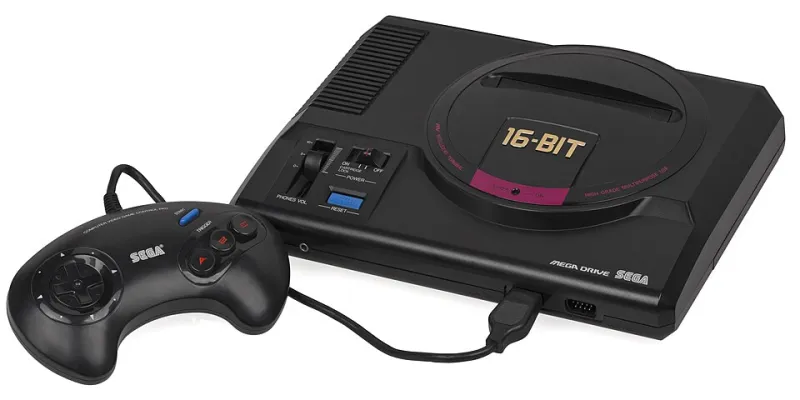
The 32X deserves to be studied in business schools. Launched in November 1994 at $159, it was a mushroom-shaped attachment that bolted onto the Genesis to add 32-bit processing — right as the Saturn was about to launch and make the whole concept pointless. Sega of America and Sega of Japan effectively sabotaged each other, retailers got stuck with inventory nobody wanted, and the ~$100 price cuts came fast and furious.
The tragedy is that the 32X wasn't a bad idea on paper. It was a bad idea at exactly the wrong time, sold to the exact same people who were being told to save up for a Saturn. It's the most Sega thing Sega ever did: technically interesting, commercially chaotic, discontinued within two years.
The Nomad: A Handheld Genesis Ahead of Its Schedule
Now here's one we'll defend to the death. The Nomad, released in 1995, was a handheld Genesis with a built-in screen — essentially a portable SNES-killer that played your entire existing Genesis library. It was heavy, it drained six AA batteries in a couple of hours, and it was only released in North America. It also let you play Gunstar Heroes on a road trip in 1995, which no other device on Earth could do.
The Nomad failed because the timing was cruel: the Game Gear had already exhausted Sega's handheld goodwill, and the PlayStation was months away. But conceptually, it was a Switch a full 22 years early. If Sega had shipped this in 1999 with a battery pack, we might be telling a very different history. It's the most underrated piece of hardware the company ever made, and prices on the secondhand market reflect that people have finally figured it out.
Honorable Mentions From the Boneyard
You can't cover Sega's peripheral era without a quick roll call:
- The Sega CD: A $299 add-on that promised the future of full-motion video and delivered grainy FMV games and a legendary Sonic port. Still, it gave us Lunar and Snatcher, so we forgive it.
- The Menacer: Sega's answer to the Super Scope, a six-button light gun so bulky it came with a shoulder strap. A shoulder strap. For a gun.
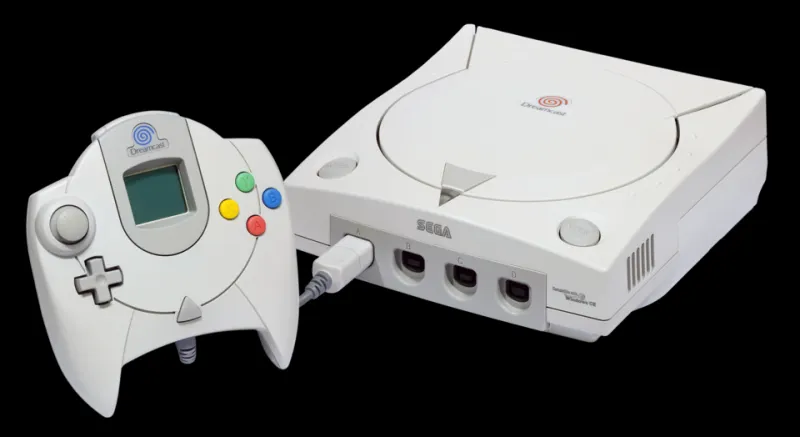
- The Dreamcast VMU: The memory card with a screen, a speaker, and mini-games. The rare Sega accessory that actually worked — a tiny, beeping glimpse of the Wii U and Switch era, seven years early.
Why We'd Do It All Again
Here's the thing about Sega's failures: they were failures of ambition, not apathy. The Activator was trying to invent motion control 13 years before the Wii. The Nomad was trying to invent the Switch 22 years early. The 32X was a panicked attempt to stretch a console's life that at least came from a place of believing the Genesis deserved better.
Compare that to today, where hardware 'experiments' are mostly special-edition colorways and slightly larger storage. Sega in the '90s didn't ask whether an idea was safe. It asked whether it was possible, then shipped it in a plastic shell shaped like a mushroom.
Nobody asked for most of this stuff. Thank goodness Sega didn't check first.