The Little Screen That Could: Remembering the Dreamcast's VMU Before Second Screens Were Cool
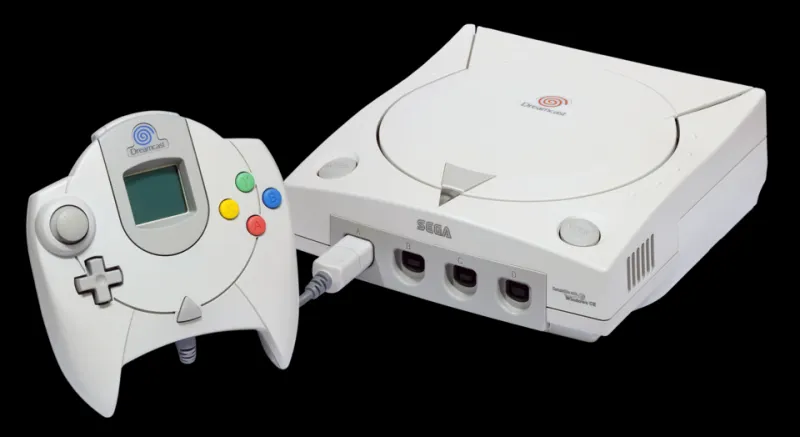
Photo: Asim Saleem (Asim18), CC BY 3.0, via Wikimedia Commons
There's a particular sound that lives in the head of every Dreamcast owner: the cheerful chirp of the VMU beeping from across the room, begging you to feed it, play with it, or just acknowledge its existence. It was a memory card that refused to act like one.
In 1999, while the PlayStation was content with a gray plastic brick that held your saves and said nothing, Sega looked at the humble memory card and asked a question nobody else thought to ask: what if this thing was alive?
What Exactly Was the VMU?
The Visual Memory Unit was, on paper, an accessory. It slotted into the top of the Dreamcast controller, stored your save files, and displayed little icons on its built-in LCD screen during gameplay — a tiny second monitor showing your plays in NFL 2K or your health in Sonic Adventure.
But pull it out of the controller, and things got weird in the best way. The VMU had its own processor, its own screen, its own buttons, and its own battery. It was a complete micro-console that happened to live in your controller. Unclip it, and you could carry a playable piece of your Dreamcast library in your pocket.
Sega sold it in the US for about $35, which even then felt like a bargain for what it actually was: a save file, a Tamagotchi, a handheld, and a status symbol all at once.
The Mini-Games Were the Magic
The killer feature was the mini-game transfer. Pop into a Chao Garden in Sonic Adventure, raise your little creature on the big screen, then download it to your VMU and take it to school. Feed it, train it, race it — all on a screen the size of a saltine. When you plugged back in, your progress carried over.
Sonic Adventure wasn't alone. Power Stone had a mini-game. Godzilla Generations had one. Skies of Arcadia let you hunt for discoveries on the go. Even Resident Evil Code: Veronica found a use for the little screen. And in Shenmue, the VMU handled your capsule toys and gave you a pocket companion in a game that already understood companionship better than most.
The genius wasn't technical — it was emotional. The VMU made your saves feel like pets. You didn't just carry your progress; you carried a relationship.
Status Symbol, Pocket-Sized
There was also the cafeteria factor. In 1999 and 2000, pulling out a VMU mid-math-class and seeing your Chao blink back at you was a legitimate flex. It was proof you owned the coolest console on the planet, the one with the internet browser and the screen in the controller.
The battery cover situation was famously bad — lose that tiny door and your VMU was on a power cord leash forever — but nobody seemed to mind. Flaws build character. Ask any Genesis owner about cartridge pins.
Everyone's Been Chasing It Since
Here's the part that stings: Sega got this right in 1999, and the industry has spent 25 years failing to catch up.
Nintendo shipped the Wii U GamePad in 2012 — a full second screen, bigger and more expensive, and it never found a game that justified it the way Sonic Adventure justified the VMU. Sony's DualSense has a touchpad nobody uses. The Xbox SmartGlass app was a shrug in app form. Even the Switch's handheld-console hybrid, brilliant as it is, isn't the same idea — the VMU wasn't the console, it was a satellite of it.
What made the VMU work wasn't the screen. It was the combination of portability, personality, and genuine gameplay. It wasn't a gimmick bolted on for a marketing bullet point; it was woven into the Dreamcast's best games from day one. The Chao Garden didn't exist despite the VMU — it existed because of it.
The Triumph Nobody Priced In
The Dreamcast lost the console war, which means history tends to file the VMU under "quaint accessory from a dead system." That's a misread. The VMU was Sega doing what Sega did best: taking a wild swing at what gaming could be, shipping it before anyone asked for it, and watching the rest of the industry quietly steal the idea a decade later.
Second screens, portable companions, save-anywhere-ecosystems — we call these modern innovations. Dreamcast owners call them Tuesday.
If you've still got a VMU in a drawer somewhere, dig it out. Drop a couple of AAs in, pop in Sonic Adventure, and download a Chao. That little beep you'll hear is the sound of Sega being years ahead of schedule one last time.