Weekend Warriors: The Rental-Only Sega Games That Formed America's Shared Gaming Memory
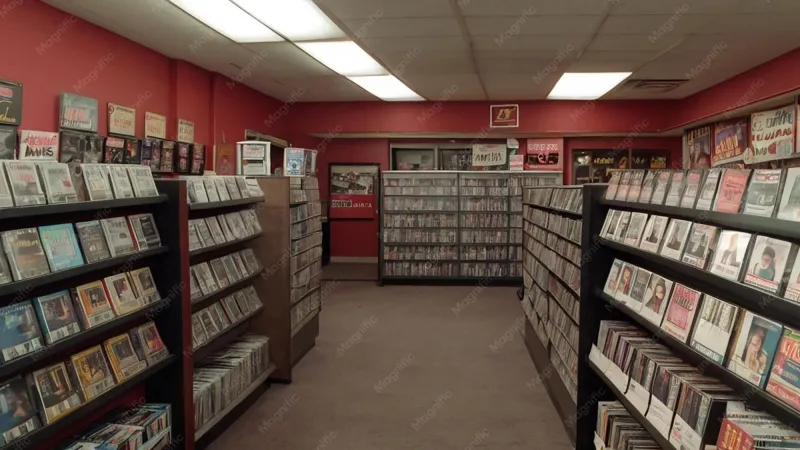
Photo: 1990s video rental store shelves VHS games nostalgia, via img.freepik.com
Nobody owned Comix Zone. That's just a fact of growing up in '90s America. You played Comix Zone — at your cousin's house, at the kid two streets over whose dad worked at Sega, or during a whirlwind Friday-to-Sunday rental from the local video store. But you didn't own it. Almost nobody did.
And yet, ask any Genesis kid about Sketch Turner getting punched through panels of his own comic book, and watch their face light up like you're describing Sonic 3. That's the strange magic of the rental era: it created a generation of games that were universally experienced and rarely possessed.
The Rental Economy Made Its Own Hits
The numbers tell one story. Vectorman sold respectably. Comix Zone moved modest units. Ecco the Dolphin was a cult item from day one. By pure sales figures, these are mid-tier titles — the kind that show up in a paragraph, not a headline, in most Sega histories.
But the rental shelf told a completely different story. In the mid-'90s, a Genesis game at Blockbuster or your local independent shop got rented dozens of times over. One cartridge, circulating through a whole neighborhood of kids, racking up hundreds of collective hours. Sales data couldn't see any of it, but the cultural impact was enormous.
The result was a shared canon of "almost classics" — games everyone knew, everyone could talk about, and almost nobody could finish because you only had the weekend.
Three Days With Ecco the Dolphin
Ecco deserves special mention, because it might be the purest rental game ever made. A gorgeous, hypnotic, genuinely difficult underwater odyssey about a dolphin fighting alien threats? That's not a purchase — that's a commitment. You bought Madden. You rented Ecco.
Every kid who rented Ecco remembers the same thing: the opening. That haunting whale song, the serene gliding through coral, and then — about forty-five minutes in — the dawning realization that this beautiful game was going to be hard, confusing, and possibly unbeatable in a single weekend.
You never beat Ecco. You just visited it. Like a museum exhibit that changed locations every few months.
Vectorman and the Art of the Impressive Rental
Vectorman was the opposite kind of rental — the show-off game. When your friend's older brother rented it, you gathered around the TV to watch those fluid, pre-rendered vector animations and convince yourselves this was proof the Genesis could hang with anything Nintendo put out.
Vectorman was Sega's answer to Donkey Kong Country's pre-rendered graphics, and as a rental, it was perfect. Dazzling enough to impress, tough enough that you'd need to rent it again. The business model practically designed itself: a game that was more fun to borrow than to buy was, in the rental economy, a blockbuster.
Comix Zone: The Weekend's Perfect Length
Here's the thing about Comix Zone that nobody says out loud: it's short. Beatable in a determined afternoon, honestly. But in 1995, no rental kid ever beat it, because the difficulty was tuned like a landlord — unforgiving and always collecting. Sketch's health doubled as his attack resource, enemies spawned from panels mid-fight, and one bad decision meant starting over.
So Comix Zone lived in that perfect rental loop: hard enough that you never finished it, short enough that you always believed next weekend would be the weekend. It was the video game equivalent of a movie you kept renting because you always fell asleep before the ending.
The Canon Nobody Wrote Down
What's fascinating in retrospect is how this rental canon shaped the way our generation remembers Sega. The games we owned — Sonic, Streets of Rage, the sports titles — we remember as personal experiences, tied to birthdays and holidays. But the rental games are remembered communally.
Ask a room full of thirty-somethings about Vectorman and you'll get a group conversation, not individual anecdotes. "Did you ever beat that?" "No way, you?" That shared incompleteness is its own kind of nostalgia — warmer, in some ways, than mastery.
Why They Deserve Better Than Their Sales Charts
Sega's history tends to be written by sales figures and flagship franchises, which relegates games like Comix Zone and Ecco to footnote status. That's a mistake. These games represented Sega at its most adventurous — weird concepts, bold art direction, difficulty curves that respected nobody. They were the experiments that filled out the library and, thanks to rentals, reached more kids than their sales figures will ever suggest.
Thankfully, the modern era has been kinder to them. Ecco has appeared on multiple re-release collections, Vectorman and Comix Zone have been ported to just about everything with a screen, and a new generation can finally beat what we never could.
But there's something the re-releases can't replicate: the rental context. The three-day clock. The shared, unfinished memory. Those games weren't just software — they were weekend events, passed hand to hand across an entire neighborhood.
Nobody owned them. Everybody played them. And for a certain generation of American kids, that made them classics all the same.