The Timer Was the Design: What Crazy Taxi Knew That Live-Service Games Still Don't

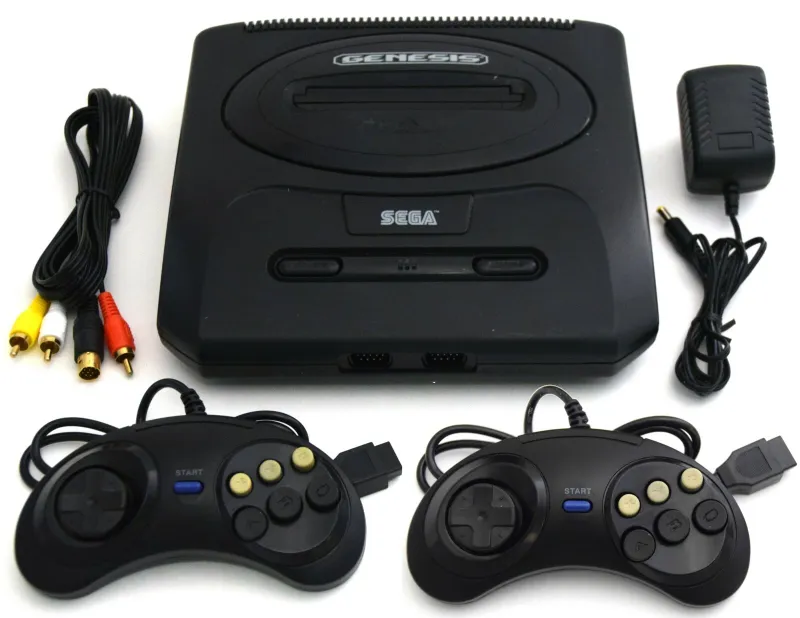
Photo: Vyacheslav Argenberg, CC BY 4.0, via Wikimedia Commons
There's a moment in every round of Crazy Taxi that I can still feel in my hands twenty-plus years later. You've dropped off a fare at Pizza Hut, the timer's down to single digits, and you spot a customer across the intersection who wants to go somewhere impossibly far. You have to make a snap judgment: is this fare worth it? Do I have the time? Can I get there?
That question — can I get there? — is the entire genius of Sega's arcade design, and it's something the games industry has spent the last decade trying and failing to bottle.
Three Minutes, Not Three Hundred Hours
Arcade cabinets in the '80s and '90s ran on a brutal economic truth: every second a kid spent playing without feeding the machine was money lost. So designers built games around compressed sessions. Three minutes. Sometimes less. And the constraint didn't limit the design — it became the design.
When Sega brought these games home on the Dreamcast, the philosophy came along for the ride. Crazy Taxi, Crazy Taxi 2, Jet Grind Radio's competitive streak, even the feverish pace of Sega Rally — these weren't dumbed-down arcade ports. They were pure distillations of a loop that said: here's a goal, here's a clock, go make something happen.
And here's the thing nobody talks about enough: the timer was generous in its cruelty. It didn't care how much you'd played. It didn't reward loyalty. It reset the board every single time. Your skill was the only variable, which meant every session was a fair test and a fresh start.
What the Live-Service Era Got Backwards
Now look at the modern landscape. Every big publisher wants the thing arcade games had — that tight, compulsive loop that pulls you back tomorrow — but they want it bolted onto games built to keep you for hundreds of hours. Daily login bonuses. Battle passes. FOMO-limited events that expire on Tuesday.
The difference is subtle but fundamental. Sega's three-minute loop asked what can you do right now? The live-service model asks what will you miss if you leave? One is a magnet; the other is a leash. Players can feel the difference even if they can't articulate it.
A round of Crazy Taxi ends and you immediately hit start again — not because the game threatened you, but because you're one good route away from an S-rank run. The loop closes cleanly. Nothing is withheld. The carrot is competence, and competence is available to anyone willing to learn the map.
The Indie Revival Knows the Secret
The good news is the design philosophy never died — it just moved to smaller studios. Look at the wave of indie games that consciously or not carry Sega's arcade DNA: Dredge runs on day cycles, Pizza Tower is Wario Land filtered through a speedrun clock, and something like UFO 50 is practically a museum of short-session purity. Even the roguelike boom — Hades, Slay the Spire — is the arcade loop wearing new clothes: short runs, clean resets, mastery as the reward.
These games understand what Crazy Taxi understood. A session with a defined end is a story. You start, you struggle, you either make it or you don't, and the ending gives the whole thing shape. Games that never end don't have stories; they have habits.
Give Me Three Minutes, Not My Whole Evening
I'm a dad now. My gaming windows are measured in minutes between responsibilities, and you'd think the industry's endless "session design" would cater to that. It mostly doesn't. Most modern games want a commitment before they give you anything back — a tutorial, a cutscene, an update that's 40 gigabytes.
Then I fire up Crazy Taxi on whatever device I've got it running on, and within fifteen seconds I'm leaning hard left onto the highway shortcut past the gas station. No patch. No queue. No battle pass. Just me, the clock, and one more fare I probably shouldn't have picked up.
Sega's arcade designers weren't working with less — they were working with exactly enough. The three-minute loop wasn't a limitation of coin-op economics. It was the whole point, and twenty-five years later, most of the industry still hasn't caught up to it.
Yeah, yeah, and one more thing: the off-brand soundtrack on the re-releases is a crime, and no, I will not be taking questions.