Joe Montana Bought More Consoles Than Sonic Ever Did
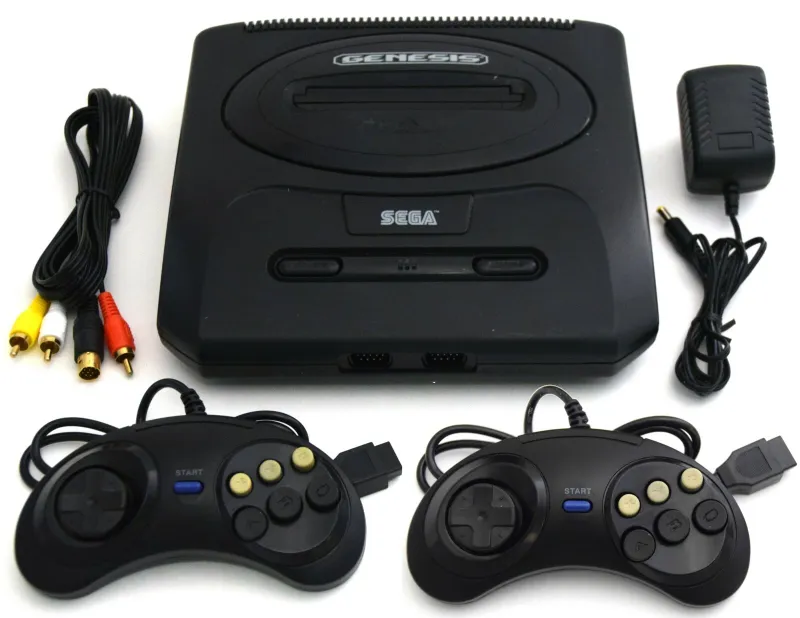
Photo: vintage 1990s Sega Genesis video game console with controller, via i.ebayimg.com
Ask anyone what sold the Genesis in America and you'll get the same answer: a blue blur, attitude, and a two-second long jump animation that changed everything. That answer is half right. But spend any time talking to people who actually begged their parents for a Genesis between 1990 and 1994, and a different picture emerges — one full of turf fields, face-off circles, and a quarterback in a 49ers jersey.
Sega's sports catalog didn't get the magazines covers. It didn't need them. It got the sales receipts.
The Problem With Being the 'Fun' Console
By 1991, Sega had a reputation problem disguised as a marketing win. The hedgehog made the Genesis cool, but cool doesn't close the deal with Dad — the person holding the wallet in most American households circa the Bush administration. Dad wanted football. Dad wanted something that looked and felt like Sunday afternoon, not a cartoon.
Nintendo had its licenses locked up tight, but Sega of America, under the aggressive leadership of Tom Kalinske, went hunting. What they landed was bigger than anyone expected: an exclusive deal to put Joe Montana — arguably the biggest name in football at the time — on the box. Nintendo had NFL licenses. Sega had the actual guy you wanted to be.
Joe Montana Football: The Trojan Horse
Here's the part people forget: the original Joe Montana Football wasn't even that great. It shipped without an NFL license, meaning no real teams, just cities and rosters of guys named things like "QB 49ERS." It was a solid, readable game of football — and that was the point. It ran fast, the passing game felt intuitive, and it didn't punish casual players for not knowing the playbook.
Sega learned the right lesson from it. The sequels — Joe Montana II: Sports Talk Football, in particular — became legendary for reasons that had nothing to do with graphics. Veteran announcer Lon Simmons calling the action in real time, reacting to what was actually happening on the field, felt like witchcraft in 1991. Suddenly the Genesis wasn't just the fast console. It was the one that talked to you like a real broadcast.
Every weekend, some kid in Ohio or Texas talked their dad into a trip to the mall "just to look," and every weekend that dad stood in front of a kiosk demo running Joe Montana. The math writes itself.
Mutant League: When Sega Stopped Pretending
Then there was the other end of the spectrum. Mutant League Football took the same engine philosophy and cranked it through a blender of monsters, bribed referees, and plays like "Kill the Ref." It was football for kids who thought the real thing was too polite — which, in 1993, was a genuinely radical pitch.
What made it brilliant was that underneath the gimmick sat an honest-to-goodness competent football sim. You could actually run a two-minute drill. The comedy was the frosting, not the cake. Sega had figured out the formula: take the sports genre seriously, then give it a reason only Sega could justify.
The Quiet Economics of the Sports Shelf
Sports games had a superpower Sonic never did: replayability measured in months, not sittings. A kid would beat Sonic 2 in a couple of weekends. A Joe Montana or NHL All-Star Hockey cartridge got played every single day from September through February, usually with a sibling or a friend on the couch. Rental chains saw them come back with worn labels. Parents saw value. Sega saw repeat customers.
And crucially, sports cartridges sold consoles in households Sega otherwise couldn't crack. The Genesis was winning the 16-bit war in the US not because every kid wanted a hedgehog, but because every house had one sports fan who needed a reason to pick a side in the Nintendo-Sega war. Sega gave them a Hall of Fame quarterback and a hockey game with fights. Nintendo gave them a season without their favorite team.
Why Nobody Remembers
The sad footnote is that Sega's sports empire evaporated almost overnight. When EA's Madden secured full NFL licensing and the next console generation arrived, Sega's sports division — eventually rebranded and restructured repeatedly — lost its reason to exist. The games that funded the Genesis's American invasion became trivia questions.
But the lesson stuck around, even if Sega stopped applying it. Mainstream America doesn't buy consoles because of icons. It buys consoles because of Sunday afternoons. Sega knew that once. For a few glorious years, the loudest thing about the Genesis wasn't blast processing — it was a play-by-play man calling a touchdown in a living room in Tulsa.