Scared Straight at 200 California Street: The Real Nerves Behind Sega of America's Trash Talk

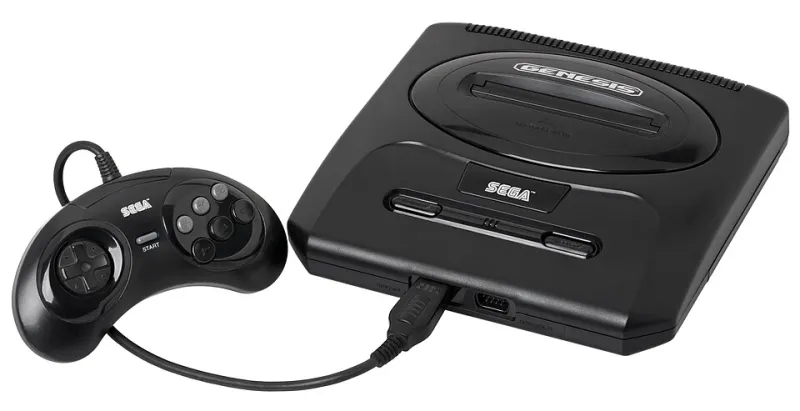
Photo: Nadao Bangkok, CC BY 3.0, via Wikimedia Commons
The myth is easy to retell. Sega was the loud one. Nintendo was the polite one. One company threw haymakers in prime-time commercials while the other sat there in its red logo, unbothered. That's the version that gets recycled in every console war documentary, and it's tidy. It's also wrong in one important way: the bravado was a mask, and the people behind it will mostly tell you, decades later, that they were scared out of their minds.
The Loud Kid in the Schoolyard Was bluffing
Start with the obvious asymmetry. In 1990, Nintendo held something like 90 percent of the US home console market. Sega of America, headquartered in San Francisco, was a distant, scrappy branch of a Japanese parent company that didn't always understand or trust what its American team was doing. Nintendo had the licenses, the retail relationships, the licensing fees, and the reserve of goodwill built on a decade of not rocking the boat.
So when Tom Kalinske's team greenlit spots that openly mocked the competition — a Sonic the Hedgehog montage rolling behind a kid sneering "I don't play with dolls" — the point wasn't confidence. It was the only play available. When you can't outspend someone, you out-shout them, and you pray nobody notices your hands shaking.
Former Sega of America marketers have described the era in interviews and oral histories the same way again and again: it was a knife fight where the other guy had a bigger knife. The famous "Genesis does what Nintendon't" line, coined by copywriter Paul McEnroe at the agency, wasn't just a pun. It was a positioning strategy born from a spreadsheet. Sega couldn't beat Nintendo on library size or brand trust, so they attacked on specs, speed, and attitude — the three things a 16-bit Genesis could legitimately claim.
The Memos Tell a Different Story
The mythology lives in the commercials. The reality lives in internal correspondence. Accounts from the era — including reporting in books like Console Wars by Blake Harris, which mined a mountain of Sega memos and meeting notes — paint a picture of a marketing department that oscillated between mania and genuine dread.
There are stories of campaign decks that read like military briefings. Market share percentages tracked with the urgency of casualty reports. Executives debated whether a single bad Christmas quarter could end the whole North American operation. And underneath it all ran a persistent fear that Nintendo didn't actually need to fight back — it could simply wait Sega out, starve them of third-party support, and let the market do the strangling.
Which, to be fair, is roughly what happened. When Nintendo finally responded — first with the Super NES, then with the licensing muscle that kept Square and Enami-era heavyweights exclusive — Sega of America's war room energy couldn't compensate for a parent company in Tokyo that kept undercutting its own momentum with hardware decisions nobody in California asked for. The 32X is what happens when the shouting stops and the panic takes over.
What the Rivalry Did to the People Inside It
Here's the part that gets lost in the nostalgia: this wasn't a game for the folks on the second floor. People describe 70-hour weeks, campaigns launched and killed in days, and a culture where the rivalry became identity. Employees didn't just work at Sega — they were Sega, in opposition to everything Nintendo represented. That kind of us-versus-them chemistry produces brilliant work. It also burns people out.
Some veterans look back fondly. Others describe a workplace where the pressure to be the scrappy insurgent meant never being allowed to feel secure, even at the company's 1993 peak, when the Genesis was outselling its rival and Sonic was on everything from cereal boxes to an NBC cartoon. Winning didn't lower the temperature. If anything, it raised the stakes, because now there was something to lose.
There's a particular kind of exhaustion that comes from having to be the rebel forever. Rebels don't get to coast. The moment Sega of America stopped being the underdog, it had no script for what came next.
Why the Myth Still Matters
Thirty years on, the console war has been flattened into a fun bit of brand theater — a meme, a T-shirt, a nostalgia beat in a documentary. And sure, the ads hold up. But the real story is more interesting than the swagger: it's about a group of marketers who looked at a competitor three times their size and decided the only weapon they had was personality.
The rivalry wasn't fake — the dislike was real, the competitive fury was real. But the confidence? A lot of that was performance. And recognizing that doesn't diminish the legend of '90s Sega. It deepens it. The best underdog stories always were about fear wearing a leather jacket.
Genesis did what Nintendon't, sure. But behind the slogan, a bunch of people in San Francisco were just hoping to God it was enough.